
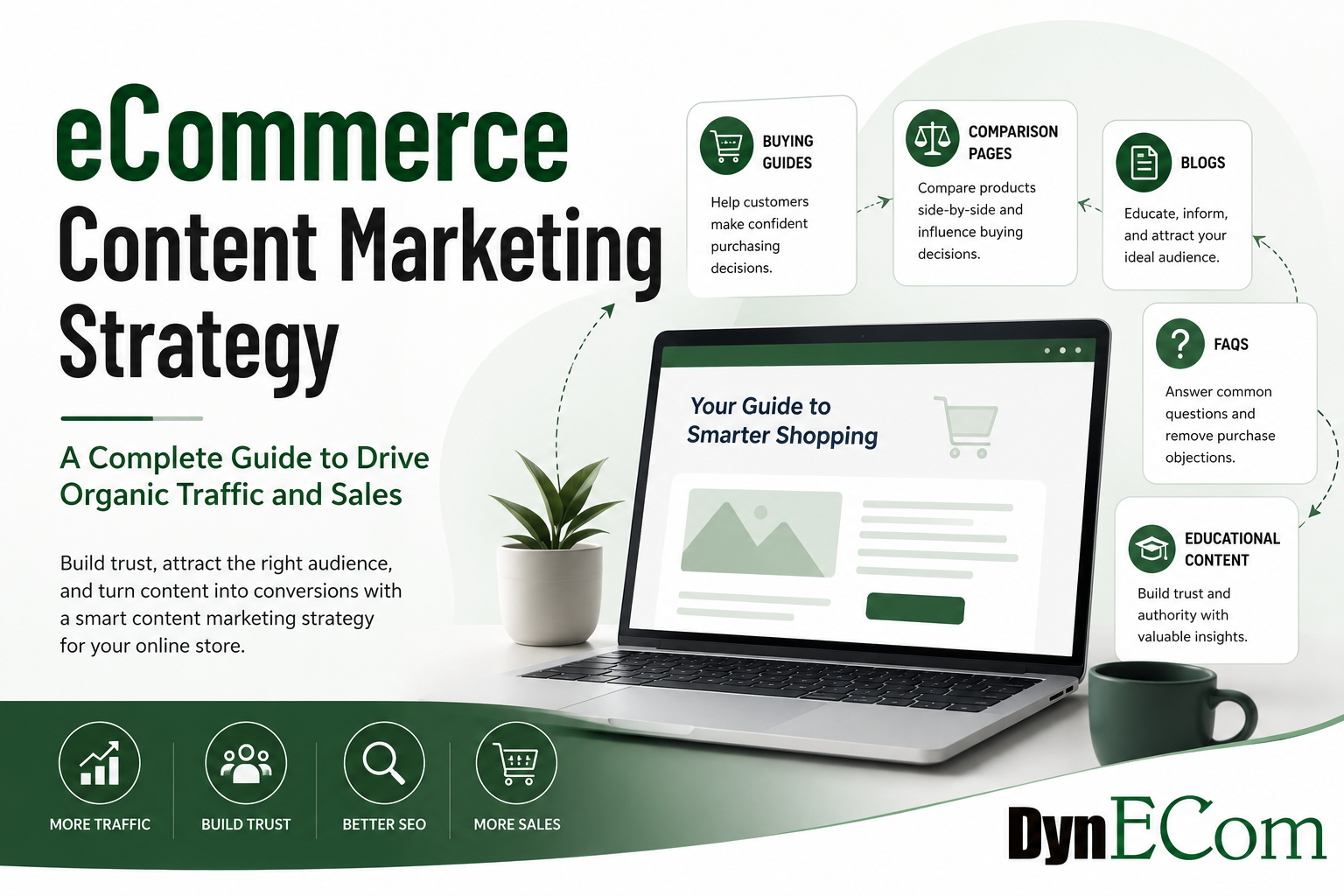
What is eCommerce Content Marketing?
eCommerce content marketing is the process of creating and distributing valuable, relevant, and search-optimized content that attracts potential customers, answers their questions, builds trust, and ultimately drives product sales.
Unlike traditional advertising, content marketing focuses on helping customers throughout their buying journey rather than immediately selling to them.
A successful eCommerce content marketing strategy includes:
- Buying guides
- Product comparison pages
- Educational blog posts
- FAQs
- Tutorials
- Videos
- Product care guides
- Seasonal content
- Customer stories
- Category content
When done correctly, content marketing helps businesses acquire customers through organic search, AI search engines, social media, email marketing, and referrals.
Why eCommerce Content Marketing Matters
Most online shoppers don’t begin their journey by searching for a product.
Instead, they search questions like:
- Best office chair for back pain
- Running shoes vs walking shoes
- How to choose a gaming monitor
- Best coffee grinder under $200
These searches happen long before they’re ready to purchase.
Brands that create helpful content become the trusted source—and often win the eventual sale.
Content marketing helps:
- Increase organic traffic
- Improve keyword rankings
- Capture top-of-funnel users
- Build brand authority
- Increase email subscribers
- Support social media campaigns
- Improve conversion rates
- Earn backlinks naturally
- Improve AI search visibility
- Increase customer lifetime value
Understanding the eCommerce Content Funnel
Every customer passes through different stages before making a purchase.
| Funnel Stage | Customer Intent | Content Type |
|---|---|---|
| Awareness | Learning | Educational blogs |
| Consideration | Comparing | Buying guides, comparison pages |
| Decision | Ready to purchase | Product pages, FAQs, reviews |
| Retention | Existing customers | Tutorials, maintenance guides |
A strong content strategy supports every stage.
1. Buying Guides
Buying guides are among the highest-converting content types in eCommerce.
Their purpose is helping shoppers choose the right product.
Examples:
- Best laptops for college students
- Complete mattress buying guide
- How to choose hiking boots
- Which air fryer should you buy?
Buying guides should include:
Product categories
Explain different product types.
Example:
Running Shoes
- Neutral
- Stability
- Trail
- Racing
Features to Consider
Discuss:
- Size
- Material
- Performance
- Durability
- Weight
- Warranty
- Compatibility
Budget Recommendations
Help shoppers choose based on budget.
Example:
- Under $50
- $50–100
- Premium
- Professional
Pros and Cons
Honest evaluations improve trust.
Internal Links
Buying guides should link to:
- Category pages
- Product pages
- Related blogs
- Comparison pages
This strengthens topical authority.
2. Product Comparison Pages
Comparison content targets high-intent buyers.
Examples:
- iPhone vs Samsung
- Standing Desk vs Traditional Desk
- Memory Foam vs Latex Mattress
Comparison pages answer the exact questions shoppers ask before purchasing.
An effective comparison page includes:
Feature Comparison Table
Compare:
- Price
- Material
- Warranty
- Size
- Weight
- Features
- Ratings
Pros and Cons
Highlight strengths and weaknesses of each option.
Best For
Explain which customer each product suits.
Example:
Product A
Best for beginners.
Product B
Best for professionals.
Final Recommendation
Summarize the comparison and recommend products based on different use cases rather than declaring a single universal winner.
3. Educational Blog Content
Educational blogs attract visitors who are still researching.
Topics include:
- How-to articles
- Industry trends
- Product maintenance
- Troubleshooting
- Seasonal advice
- Expert tips
Examples:
- How to clean leather shoes
- How often should you replace your pillow?
- Beginner’s guide to home gym equipment
Educational content builds trust long before customers buy.
Create Topic Clusters
Rather than publishing random articles, organize content around pillar topics.
Example:
Pillar:
Running Shoes
Supporting articles:
- Best running shoes for beginners
- Running shoe sizing guide
- Running shoe care tips
- Trail vs road running shoes
- Common running shoe mistakes
This structure improves internal linking and topical authority.
4. Frequently Asked Questions (FAQs)
FAQs help customers overcome purchase objections.
Good FAQ content answers questions such as:
- Which size should I buy?
- How long does shipping take?
- Can I return the item?
- Is this compatible with my device?
- What’s included in the box?
- How do I maintain this product?
Benefits include:
- Better user experience
- Reduced customer support
- Increased conversions
- Additional keyword coverage
- Greater visibility in AI-generated answers
5. Educational Resources Beyond Blogs
Modern eCommerce content extends beyond written articles.
Consider creating:
Video Tutorials
Examples:
- Product setup
- Unboxing
- Assembly
- Troubleshooting
Infographics
Visual explanations for:
- Product comparisons
- Buying checklists
- Maintenance schedules
Downloadable Guides
Examples:
- Size charts
- Product catalogs
- Buying checklists
- Care instructions
Interactive Tools
Examples:
- Product finder quizzes
- Size calculators
- Compatibility checkers
- Budget calculators
Interactive content increases engagement and helps shoppers make confident decisions.
Build a Content Calendar
Consistency is more important than volume.
A balanced monthly publishing schedule might include:
| Content Type | Frequency |
|---|---|
| Buying Guide | 2 per month |
| Comparison Article | 2 per month |
| Educational Blog | 4–8 per month |
| FAQ Updates | Weekly |
| Product Tutorials | Weekly |
| Seasonal Content | Quarterly |
Update high-performing content regularly to maintain rankings and accuracy.
Optimize Every Content Piece for SEO
Great content deserves strong optimization.
Follow these best practices:
- Target one primary keyword and several related keywords.
- Write compelling titles and meta descriptions.
- Use descriptive H2 and H3 headings.
- Add internal links to relevant categories, products, and articles.
- Include optimized images with descriptive alt text.
- Implement structured data where appropriate.
- Improve page speed and Core Web Vitals.
- Ensure content is mobile-friendly.
- Refresh outdated statistics, screenshots, and recommendations.
Use AI Without Losing Authenticity
AI tools can accelerate research, outlines, and first drafts, but they should not replace human expertise.
Use AI to:
- Generate topic ideas
- Build outlines
- Identify keyword opportunities
- Summarize research
- Create content briefs
Always review content for accuracy, add original insights, include real examples, and align it with your brand voice. The goal is to produce genuinely helpful content that demonstrates experience and expertise.
Measure Content Marketing Success
Track metrics that reflect both visibility and business impact.
SEO Metrics
- Organic traffic
- Keyword rankings
- Click-through rate (CTR)
- Indexed pages
- Backlinks earned
Engagement Metrics
- Time on page
- Scroll depth
- Bounce rate
- Pages per session
- Newsletter sign-ups
Conversion Metrics
- Assisted conversions
- Product page visits
- Add-to-cart rate
- Revenue from organic traffic
- Conversion rate by content type
Analyze top-performing content regularly to identify opportunities for expansion, updates, or internal linking improvements.
Common eCommerce Content Marketing Mistakes
Avoid these frequent pitfalls:
- Publishing content without understanding search intent.
- Creating isolated articles instead of topic clusters.
- Overusing promotional language instead of providing value.
- Ignoring informational keywords that influence early buying decisions.
- Neglecting internal linking between blogs, categories, and products.
- Failing to update evergreen content.
- Publishing AI-generated content without fact-checking or adding original insights.
- Measuring only traffic instead of conversions and revenue.
Best Practices for eCommerce Content Marketing
- Build content around the entire customer journey.
- Create comprehensive buying guides for major product categories.
- Publish detailed comparison pages for high-intent keywords.
- Maintain an educational blog that answers real customer questions.
- Expand and refresh FAQ sections as products evolve.
- Connect all content with strategic internal links.
- Repurpose articles into videos, infographics, email campaigns, and social media posts.
- Update evergreen content regularly to keep it accurate and competitive.
- Focus on expertise, trustworthiness, and helpfulness over publishing frequency.
- Measure performance continuously and refine your strategy based on data.
Conclusion
A successful eCommerce content marketing strategy goes far beyond publishing occasional blog posts. It creates a connected ecosystem of buying guides, comparison pages, educational articles, FAQs, and interactive resources that support shoppers from initial research through post-purchase engagement.
When your content answers real questions, demonstrates expertise, and is optimized for search engines and AI-powered discovery, it becomes a long-term asset that drives qualified traffic, builds trust, and increases conversions. Instead of treating content as a marketing expense, view it as a scalable investment that compounds in value over time—strengthening your brand authority and generating sustainable organic growth.
Want to master every aspect of eCommerce SEO? Explore our comprehensive guide that covers everything from keyword research and technical SEO to AI search optimization, product page SEO, category optimization, structured data, Core Web Vitals, and advanced strategies for growing your online store.
→ Read: The Ultimate eCommerce SEO Guide for 2026

Dharmendra Tripathi is a Senior Digital Marketing & Customer Success leader with deep expertise in eCommerce SEO, performance marketing, and marketplace growth. With years of experience managing SEO and advertising campaigns across Google, Meta, Amazon, Walmart, and Shopify, he helps brands improve search visibility, maximize advertising ROI, and accelerate online sales. Passionate about AI-powered search, content optimization, and analytics, Dharmendra regularly shares actionable insights to help eCommerce businesses stay ahead in an evolving digital landscape.